


Did you know that the average recruiter spends 23 hours screening resumes to fill a single role? It’s no surprise then that 52% of HR professionals say screening is the most challenging part of recruiting.
However, with the right strategies in place, this process can become faster, smarter, and far more effective at identifying the best candidates.
In this article, we’ll explore proven best practices and powerful tools to help you master screening in recruitment and make better hiring decisions.
What is screening in recruitment?
Screening in recruitment is the process of filtering job applicants to identify those who meet the basic qualifications and are worth advancing to the next stage.
It serves as the first checkpoint, where recruiters review resumes and applications, and sometimes conduct short assessments or calls to narrow the candidate pool.

With job postings often attracting hundreds of applicants, effective screening helps hiring teams focus on the small percentage, often just 3%, who are strong fits for the role.
Screening can be divided into two main stages:
- Pre-screening: The initial phase that quickly filters out underqualified candidates using resume reviews, AI tools, and brief skill assessments, ensuring only strong prospects move forward.
- In-depth screening: A deeper evaluation that includes structured interviews, behavioral assessments, and job-related tests to assess both technical skills and cultural fit.
Benefits of screening in the hiring process
Implementing a strong screening process brings structure, clarity, and consistency to recruitment, helping teams hire smarter, faster, and more confidently. Here are some of the key benefits:
1. Time and cost efficiency
Efficient screening saves hours of manual work by quickly filtering out unqualified applicants. Recruiters can focus their time on top candidates, reducing administrative effort and lowering overall hiring costs.
2. Improved quality of hire
A well-designed screening process ensures that only the most capable and best-fit candidates move forward. This leads to stronger hires who perform better, stay longer, and contribute more effectively to team success.
3. Reduced risk of bad hires
By catching red flags early, such as inaccurate credentials, missing skills, or poor culture fit, screening helps prevent costly hiring mistakes.
Since a single bad hire can cost up to 30% of the employee’s first-year salary, thorough vetting pays off in long-term savings and team stability.
4. Better candidate experience and stronger employer brand
Transparent and timely screening shows candidates that your organization values their time and professionalism. Prompt communication, clear feedback, and fair evaluation create a positive impression that enhances your employer brand and encourages future referrals.
The screening process: A practical step-by-step guide
The screening process typically follows a series of stages that help organizations move efficiently from a broad pool of applicants to the most qualified candidates.

While each company may have its own approach, most processes flow through the following key steps.
Step 1: Review applications and resumes
The process begins when recruiters collect and review all incoming applications. Using tools like applicant tracking systems (ATS), they evaluate how well each candidate meets the job requirements by checking:
- Work experience relevant to the position
- Education and training background
- Technical or soft skills required for the role
- Keywords that match the job description
Step 2: Shortlist candidates based on criteria
After the initial review, recruiters create a focused shortlist of promising candidates. This involves ranking or scoring applicants against refined criteria such as:
- Required certifications or licenses
- Minimum years of experience
- Location or availability for hybrid/on-site work
- Specialized technical skills
Step 3: Conduct initial assessments or interviews
With a shortlist in place, recruiters begin more direct evaluations. This may include:
- A brief phone or video interview (15–30 minutes) to verify key details and gauge communication skills
- Skills or aptitude tests to confirm technical or role-specific competencies
- Short behavioral questions to assess motivation and cultural fit
Step 4: Verify background and references
Once top candidates are identified, recruiters perform background and reference checks to confirm all information is accurate. This may include:
- Verifying employment history, education, and certifications
- Running criminal or credit checks, if appropriate for the role
- Contacting references, such as former managers, to gather feedback on performance and professionalism
Step 5: Prepare the final shortlist for hiring managers
After all evaluations and verifications are complete, recruiters compile a final shortlist of the most qualified candidates. This list is shared with hiring managers, along with:
- Interview notes and feedback
- Assessment or test results
- Background and reference summaries
At this stage, the screening process concludes, and hiring managers proceed with in-depth interviews and final decisions.
Best practices for better candidate screening
To get the most out of your recruitment screening, it’s important to use strategies that enhance accuracy, efficiency, and candidate goodwill. Below are some actionable best practices to improve your screening process:
1. Define clear criteria upfront
Before reviewing any resumes, align with the hiring team on exactly what makes an ideal candidate. Identify the essential skills, qualifications, and personal attributes the role demands, along with any non-negotiables, such as certifications or travel requirements.
✅ How it helps recruiters:
- Improves focus: Provides measurable benchmarks so you can evaluate applicants more efficiently and objectively.
- Saves time: Streamlines screening by allowing quick comparisons against a clear standard.
- Reduces bias: Ensures every candidate is assessed using the same consistent, transparent criteria.
Here are some of the key criteria to outline upfront:
2. Standardize your screening process
A fair process starts with consistency. When every candidate goes through the same screening steps, you get clearer comparisons, fewer bias-driven decisions, and stronger hires overall.
✅ How to make it work
- Use one set of questions: Create a standardized list of screening questions tied directly to the job requirements to keep conversations focused and comparable.
In fact, 72% of hiring managers report that structured interviews with set questions are more reliable than unstructured interviews.
- Score answers consistently: Develop a simple scoring guide so every recruiter evaluates responses the same way, turning opinions into measurable insights.
- Check for fairness regularly: Review scorecards or call notes once in a while to make sure the process is being applied evenly across all candidates.
- Let tools keep you on track: Use your ATS or screening software to build in templates, scorecards, and reminders that automatically maintain consistency.
🧠 Example: Hilton
Hilton standardized its early-stage screening process to create a fairer and faster experience for both candidates and recruiters.
Here’s what they did:
- Created standardized screening templates: Every role now includes a defined list of core questions and evaluation criteria, ensuring all candidates are assessed on the same factors.
- Introduced clear scoring rubrics: Recruiters use structured scorecards to rate responses, reducing the influence of gut feeling and personal bias.
- Trained recruiters for alignment: The TA team ran calibration sessions so everyone understood how to apply the criteria consistently across markets and functions.
- Built structure into their tools: Hilton embedded the new screening process into its ATS, with templates and automated reminders to maintain compliance and consistency.
The results:
- Time-to-hire dropped by nearly two weeks across several high-volume roles.
- Candidate satisfaction improved, with clearer communication and faster responses.
- Recruiter efficiency increased, allowing teams to spend more time on high-value activities like relationship-building and talent engagement.
3. Balance automation with human judgment
A strong Applicant Tracking System (ATS) or AI-based screening platform can automate repetitive tasks like resume parsing, keyword filtering, and even interview scheduling.
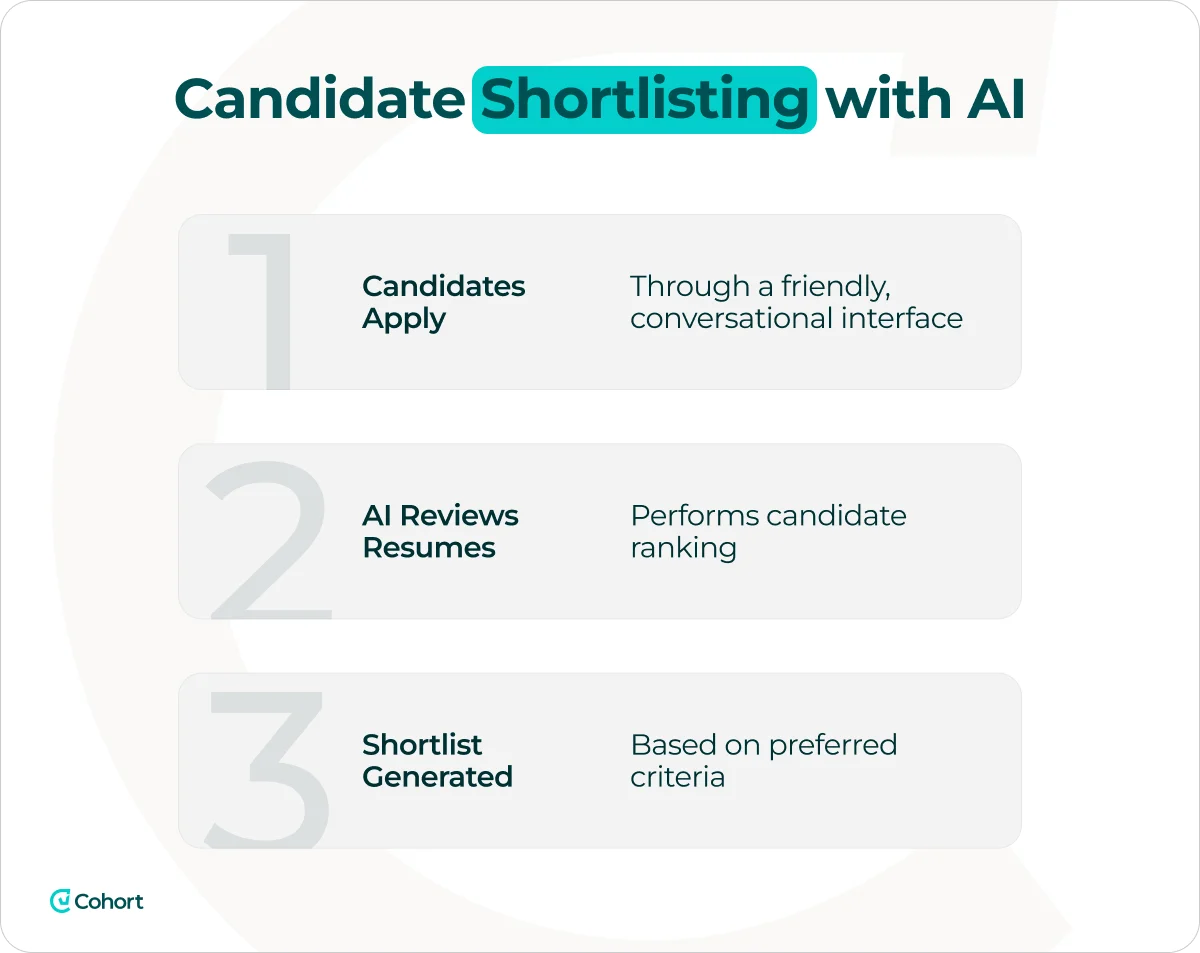
Around 70% of large companies now use an ATS to streamline hiring, and 86% of recruiters say it shortens their time-to-hire, in some cases by up to 60% faster.
✅ How to make it work
- Use automation strategically: Let your ATS handle admin-heavy tasks, such as resume sorting, interview scheduling, and candidate tracking, so recruiters can focus on relationship-building.
- Review auto-rejections regularly: Highly qualified candidates can slip through if their resumes aren’t ATS-friendly or use unconventional phrasing. Periodically check rejected profiles to ensure you’re not missing great talent.
- Fine-tune filters and AI models: Focus your screening tools on genuine must-haves (skills, experience, certifications) rather than superficial criteria.
- Maintain the human touch: Use data to guide decisions, not dictate them. Human insight is still essential for evaluating soft skills, cultural fit, and potential.
4. Incorporate skills assessments
To truly evaluate candidates’ capabilities, introduce skill-based assessments tailored to each role. In fact, studies show that almost two-thirds of employers now use skills-based hiring for entry-level roles.
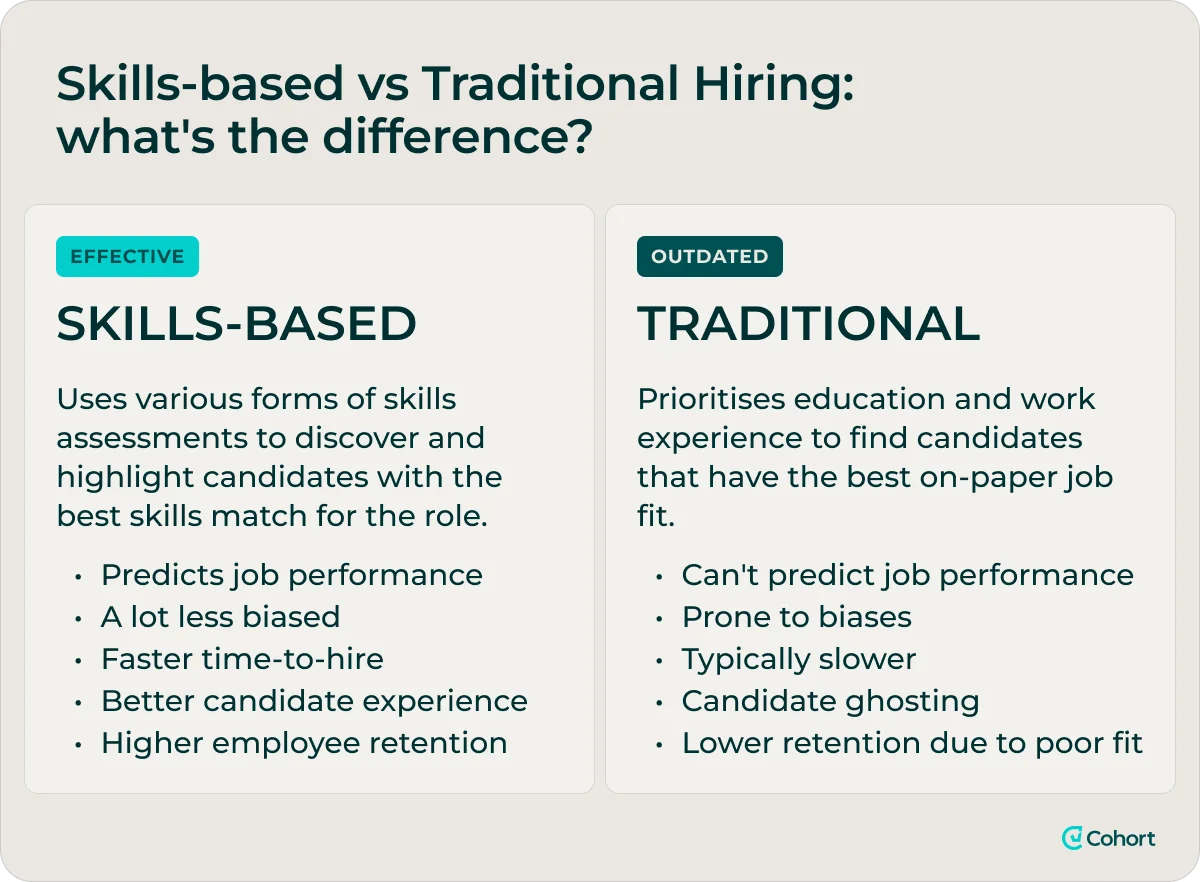
Whether it’s a coding test for developers, a writing exercise for content roles, or a role-play scenario for sales positions, these evaluations offer a hands-on view of how candidates perform in real situations.
✅ How to make it work
- Align assessments with job duties: Design tests that directly reflect the core responsibilities of the role, so you’re evaluating relevant skills rather than abstract puzzles or theoretical questions.
- Respect candidates’ time: Keep assessments focused and appropriately challenging to gather meaningful insights without creating fatigue or unnecessary barriers in the hiring process.
- Design real-work simulations: Create practical exercises that mirror actual job scenarios, such as marketers drafting short campaign briefs or engineers debugging real code, to understand how candidates think and solve problems in context.
- Use structured scoring rubrics: Establish clear, measurable criteria for evaluating responses and have multiple reviewers score independently to reduce bias and ensure consistent, data-driven hiring decisions.
5. Communicate with candidates (don’t ghost)
Did you know that 52% of job seekers say they’ve been ghosted by an employer after an interview? That lack of communication doesn’t just frustrate candidates but also damages your employer brand and discourages future applicants.
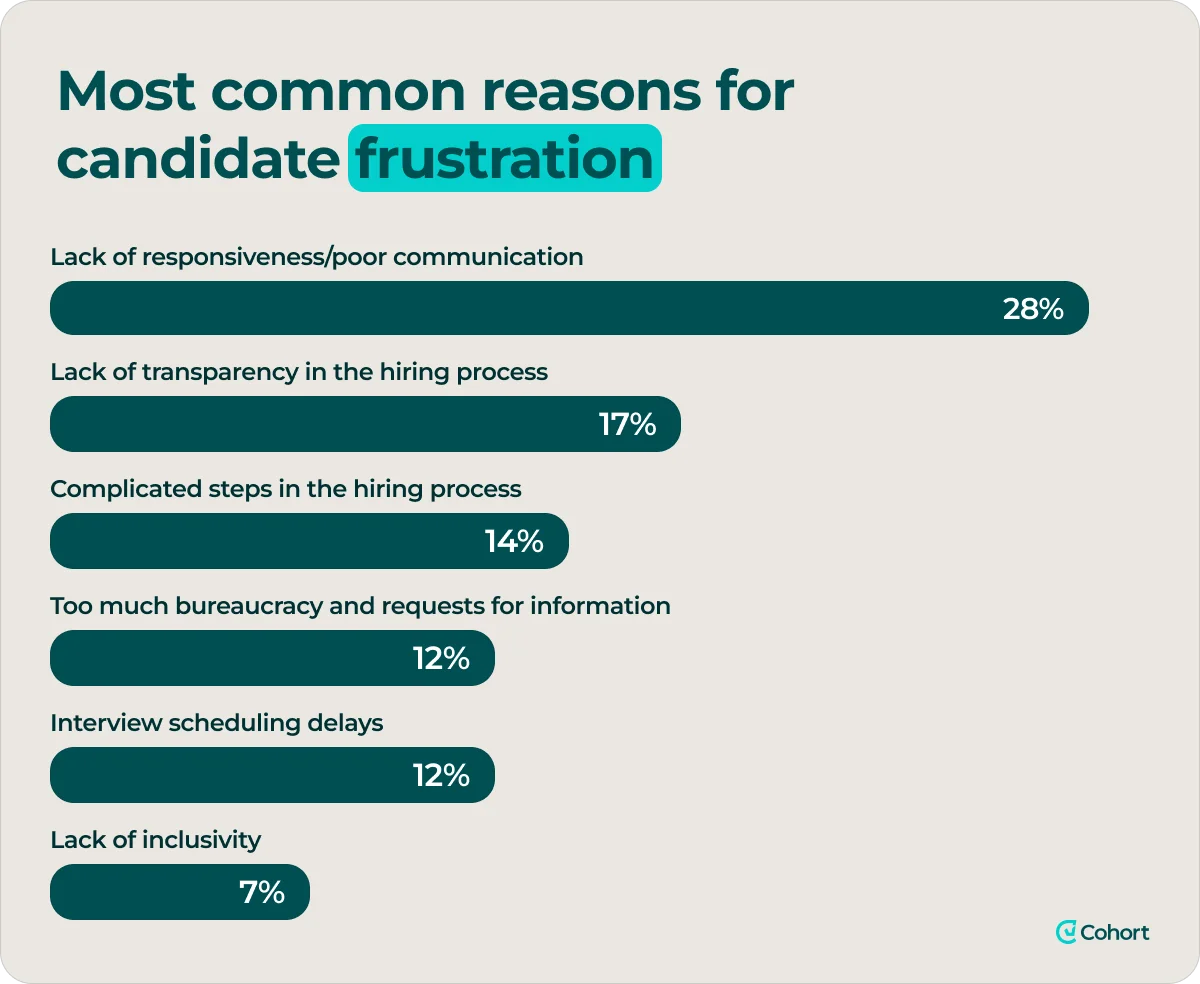
While screening may be for your benefit, remember that candidates are evaluating your company too, and every interaction shapes how they perceive your organization.
✅ How to make it work
- Close the loop: Always inform candidates promptly when they’re no longer moving forward to show professionalism and respect.
- Set expectations early: Clearly outline timelines and next steps so candidates know what to expect throughout the process.
- Send brief updates: Even a quick “We’re still reviewing applications” message goes a long way toward building trust and showing that you value the candidate’s time.
- Offer feedback when possible: A short, constructive note can leave a lasting positive impression and help candidates view your company as considerate and people-focused.
Best screening tools to streamline your hiring process
Now that you know the best practices to make your screening process more efficient and effective, let’s explore the top tools that can help you simplify candidate evaluation and speed up hiring decisions.
1. Cohort AI
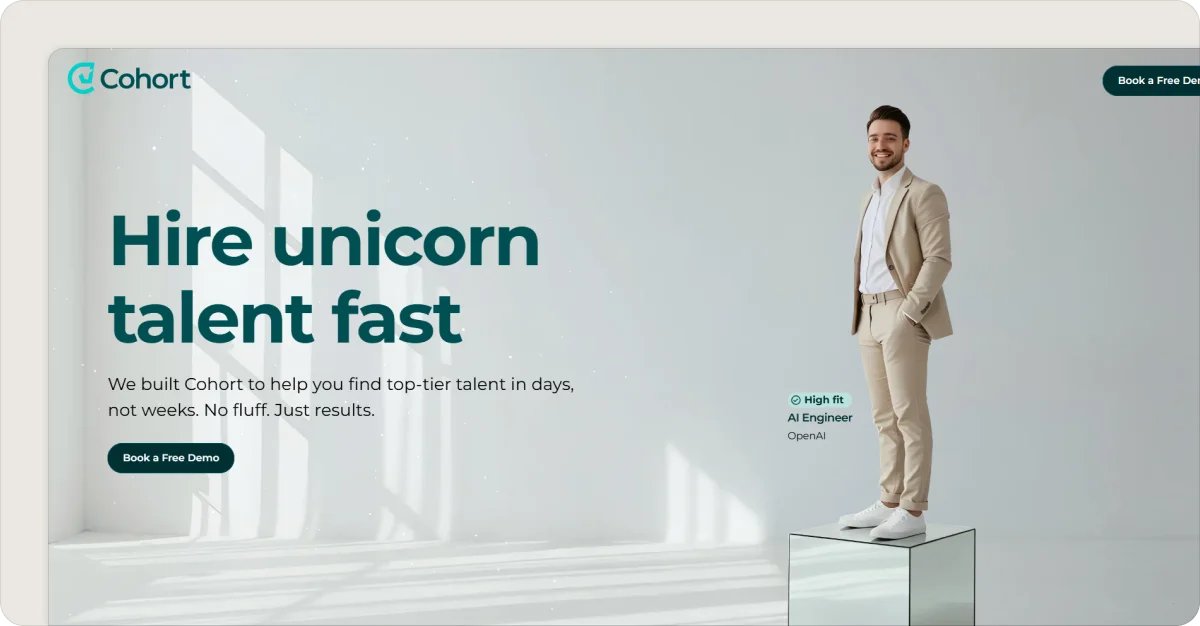
Cohort AI is a recruiting platform built to help you find and secure the top three candidates for any technical role, in days, not weeks.
Powered by SPEC, our system of AI agents that manage sourcing, outreach, screening, and engagement, Cohort functions like a 24/7 talent operations team, continuously evaluating candidates to ensure only the best move forward.
Our intelligent screening engine goes beyond resumes, assessing skills, experience, and role alignment to surface candidates who truly fit.
Key features:
1️⃣ SPEC – A team of AI agents built to help you find and hire exceptional talent faster than ever before:
- Sally the Scout (Sourcing Agent): Scans platforms such as GitHub, LinkedIn, Stack Overflow, and Kaggle to identify and rank top technical talent, surfacing high-signal profiles before they appear on job boards.
- Pete the Prospector (Outreach Agent): Delivers AI-personalized outreach based on candidate activity and role alignment, boosting engagement and response rates without manual follow-up.
- Eva the Evaluator (Screening Agent): Conducts asynchronous, role-specific interviews with AI-driven prompts, quickly assessing both technical fit and cultural alignment.
- Charlie the Closer (Engagement Agent): Manages post-shortlist communication, from nudges to offer prep, ensuring momentum, trust, and fewer candidate drop-offs.
2️⃣ Talent graph + LLM matching layer – Our system builds a rich, continuously evolving talent graph from both public and proprietary data, then applies advanced language models to identify candidates based on patterns, potential, and context, not just keywords.
3️⃣ Top 3 candidate delivery – Get a shortlist of three AI-ranked, pre-vetted candidates in just 72 business days, reducing decision fatigue and accelerating the hiring process.
4️⃣ Talent data management – Continuously ingests, validates, and enriches candidate data from multiple sources to maintain a high-quality, up-to-date talent database.
5️⃣ Rapid Cohort definition – Offers an intuitive interface for hiring managers to define ideal candidate profiles across multiple criteria and instantly generate matching cohorts from the talent database.
👉 Book a free demo today and find top candidates with Cohort A!
2. Hirevire

Hirevire is a video-based candidate screening platform that enables asynchronous interviews, allowing candidates to record responses and recruiters to review them at their convenience.
It helps organizations simplify early-stage hiring by reducing scheduling effort, improving collaboration, and centralizing candidate information.
Key features:
- Asynchronous video screening – Enables candidates to record interview responses on their own time, allowing recruiters to review and rate submissions flexibly.
- Multi-format responses – Supports video, audio, text, file, and multiple-choice answers to capture richer candidate input and improve completion rates.
- Collaborative review – Allows teams to share, comment on, and evaluate candidate responses together without needing live calls or additional meetings.
- Global accessibility – Offers multilingual AI transcripts and mobile-first design to streamline screening across time zones and devices.
3. TestGorilla

TestGorilla is an AI-powered hiring platform that helps companies source and assess candidates based on real skills using over 350 science-backed tests, video interviews, and automated scoring.
It enables data-driven, fair hiring decisions by combining the world’s largest skills-tested talent pool with advanced assessment tools.
Key features:
- Science-backed skills assessments – Offers 350+ validated tests built on psychometric theory to measure real abilities rather than relying on résumés or gut feeling.
- AI-powered scoring and video interviews – Automates candidate evaluation through AI-driven scoring and structured video interviews for faster, more objective decisions.
- Customizable assessments – Lets employers create tailored tests and questions to match specific job requirements and company needs.
- Verified, skills-tested talent pool – Provides access to over 2 million pre-assessed job seekers, enabling efficient sourcing and immediate matching with qualified candidates.
To wrap things up
Now that you know everything about screening in recruitment, you can confidently build a structured process that identifies the right talent faster and more effectively.
From setting clear criteria and standardizing evaluations to balancing automation with human judgment, every step helps refine your hiring strategy and improve the quality of your hires.
And with tools like Cohort AI, you can take screening to the next level, automating repetitive tasks, reducing bias, and highlighting top candidates in record time.
With an intelligent screening engine that goes beyond resumes, assessing skills, experience, and role alignment, you can ensure that every hire is a perfect match for your company.
Book a free demo today to see how smarter, AI-powered screening can help you identify, evaluate, and hire the best candidates with confidence!


